Microsoft Effect on Facebook
0 Comments Posted by Alex Guerrero on Friday, November 02, 2007 at 9:49 AM.

Maybe it´s totally random, but since Microsoft acquired a 1.5% stake on Facebook, the popular website is down or failing a lot.
"Where Do You Want To Go Today?"
Labels: tecnología
Windows Descubre Su Naturaleza Vírica
0 Comments Posted by Alex Guerrero on Wednesday, April 04, 2007 at 10:25 AM.

Intentad adivinar el nombre de la música que sonará. Es el video más gracioso que he visto en meses...
Labels: tecnología, youtube
Al borde de alcanzar los 3 millones de habitantes y con casi un millón de dólares diarios de actividad, al mundo virtual Second Life lo parodian. Un avizado internauta ha creado GetAFirstLife! una parodia (no jugable) donde se te invita a regresar al mundo real y descubrir qué gráficos más realistas y cuántas cosas puedes hacer con tu propio cuerpo.
Lamentablemente, ya no podrás construir un dirigible con tu mente.
Second Life (actividad el 25/Enero/2007):


Get a First Life! (o el mundo real, actividad el 25/Enero/2007):

Actualización: En lugar de amedrentarlos, los abogados de Second Life han enviado una carta al atrevido internauta para animarle a seguir con su proyecto. Eso es talante (uhm... ¿qué oscuras intenciones ocultarán?).
Lamentablemente, ya no podrás construir un dirigible con tu mente.
Second Life (actividad el 25/Enero/2007):

Get a First Life! (o el mundo real, actividad el 25/Enero/2007):

Actualización: En lugar de amedrentarlos, los abogados de Second Life han enviado una carta al atrevido internauta para animarle a seguir con su proyecto. Eso es talante (uhm... ¿qué oscuras intenciones ocultarán?).
Labels: gente, tecnología
 Es más bonito que el iPod. Los vídeos se ven de película. Tiene wi-fi incorporado que permite compartir directamente canciones y vídeos con otros zuneros que estén a tu alrededor. Y el de 30 Gigas sólo vale 250 dólares. Me gusta que haya un modelo marrón. Y sí, hablo del Zune de Microsoft. Nene tere uno...
Welcome to the Social! Share!
PS. Para los aburridos, aquí os hago un resumen de prensa dominical.
Labels: tecnología
La editorial Pearson, en colaboración con el Massachussets Institute of Technology (MIT), va a publicar un libro acerca de lo superior que es el trabajo colaborativo, que escribirán simultáneamente los profesores y alumnos de la Universidad de Pennsylvania y el MIT.
¿Qué extraño tiene esta noticia? Que van a utilizar la misma estrategia que la genial Wikipedia, es decir, millones de ojos escribiendo y corrigiendo al tiempo, simultáneamente. ¿Y para qué? Para demostrar que el trabajo colectivo (es decir, la mente colectiva) es superior al individual, por muy bueno que sea este.
Lo cierto es que la "inteligencia colectiva" es una tesis muy convicente que tiene largo recorrido y que se hizo popular con el libro del editor jefe del New Yorker James Surowiecki "The Wisdom of Crowds": el comodín de la audiencia de Quiere ser millonario es claramente un ejemplo de ello. La cooperación y competitividad de diversas mentes produce un resultado mejor que las decisiones de una sola inteligencia. "We are smarter than me", vienen a decir.
 Si esta tesis acaba conformando una teoría con fundamentos, con comprobación empírica y validez científica, las consecuencias esperables van a transformar nuestro mundo de forma radical: las democracias mucho habrán de evolucionar a algo más directo; las empresas deberán trasladar la responsabilidad de los CEOs al conjunto de los trabajadores; el arte se transformará mediante la combinación colectiva de emociones e ideas; los consumidores se ayudarán los unos a los otros para discriminar los mejores productos; ... en fin, las cosas que sugiere Surowiecki en el cuadro.
Una revolución silenciosa empieza.
Enlaces:
- "Pearson se atreve a editar un Wiki-Libro", El País 17N2006
- "We are Smarter", web oficial
¿Qué extraño tiene esta noticia? Que van a utilizar la misma estrategia que la genial Wikipedia, es decir, millones de ojos escribiendo y corrigiendo al tiempo, simultáneamente. ¿Y para qué? Para demostrar que el trabajo colectivo (es decir, la mente colectiva) es superior al individual, por muy bueno que sea este.
Lo cierto es que la "inteligencia colectiva" es una tesis muy convicente que tiene largo recorrido y que se hizo popular con el libro del editor jefe del New Yorker James Surowiecki "The Wisdom of Crowds": el comodín de la audiencia de Quiere ser millonario es claramente un ejemplo de ello. La cooperación y competitividad de diversas mentes produce un resultado mejor que las decisiones de una sola inteligencia. "We are smarter than me", vienen a decir.
Si esta tesis acaba conformando una teoría con fundamentos, con comprobación empírica y validez científica, las consecuencias esperables van a transformar nuestro mundo de forma radical: las democracias mucho habrán de evolucionar a algo más directo; las empresas deberán trasladar la responsabilidad de los CEOs al conjunto de los trabajadores; el arte se transformará mediante la combinación colectiva de emociones e ideas; los consumidores se ayudarán los unos a los otros para discriminar los mejores productos; ... en fin, las cosas que sugiere Surowiecki en el cuadro.Una revolución silenciosa empieza.
Enlaces:
- "Pearson se atreve a editar un Wiki-Libro", El País 17N2006
- "We are Smarter", web oficial
Labels: tecnología
Tengo un sueño, en forma de Nokia.
Es el N90. Wifi, GPS integrado, Symbian a bordo, una cámara de nada menos que 5 megapíxels reales, y tantas cosas... En fin, todos mis sueños en uno. Es el libro-ordenador de Sophie, la del inspector Gadget, con un toque de elegancia y .... que quiero uno, leñe.
Enlace
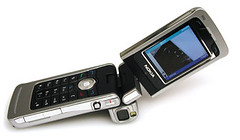
Es el N90. Wifi, GPS integrado, Symbian a bordo, una cámara de nada menos que 5 megapíxels reales, y tantas cosas... En fin, todos mis sueños en uno. Es el libro-ordenador de Sophie, la del inspector Gadget, con un toque de elegancia y .... que quiero uno, leñe.
Enlace
Labels: tecnología
NETWORKING: GIVE ME A MYSPACE!
Just a week connected to the Constitution State, and I have added a long list of buddies. Some of them offered to wait for me at the airport for moving all my stuff to my new home. Others, just friendship for hanging out. Many will be excellent guides to the city, other parts of the state, and obviously, Gotham. I have become a popular guy there! Hehehe....
One week ago, I imagined myself alone in the dark, raining or snowing out, feeling a lot of nostalgia... no way! this is gonna be funnier than i could imagine!
Just a week connected to the Constitution State, and I have added a long list of buddies. Some of them offered to wait for me at the airport for moving all my stuff to my new home. Others, just friendship for hanging out. Many will be excellent guides to the city, other parts of the state, and obviously, Gotham. I have become a popular guy there! Hehehe....
One week ago, I imagined myself alone in the dark, raining or snowing out, feeling a lot of nostalgia... no way! this is gonna be funnier than i could imagine!
Labels: diferencias, tecnología
FEEL THE SONG AND MOVE!
This was written four months ago or so at Orkut. In all this time I have been exploring how Americans interconnect in the Net. Surprisingly, they do in a extremely different way to us: Messenger is not (by far) the most common way of messaging, but AOL; and Skype is not so popular than in Europe. Gmail is a marginal mail service, but contrarily they do a more extensive and intensive use of the net for everything: from trade (e-commerce) to get dates or to establish professional networks or fan communities. They seem to ask to internet things that we usually consider strange, like helping in daily duties or making friends. Things are beginning to change here in Spain a bit, but many people would consider those usages as characteristics of freak or asocial persons.
Why those differences? One structural explanation, like this of Alesina et alt at NewYorker, would say that the strenght of unions in Europe made politicians in Europe to response differently to their American counterparts facing the 1970s oil crises and rampant inflation. While in America the oil crises was fought with more work hours per week, same wage, in Europe unions made corporations to raise wages to compensate for inflation or, alternatively, to concede a lot more of holidays to their workers. In France during the 1980s, rulers passed many laws expanding the number of mandatory holidays for the work force, thus expanding the time in the café, the museum or the rave party in Ibiza of many Europeans.
This should also be reflected in the usage of internet, and the way Americans face the net differently to Europeans. Think on that: if you don't have enough time after your workday, you will demand express and substitutive services (delivery or take-away food, house-cleaning services, gifts delivered online, online bank services, 24h malls, etc). All this can be found in the American Net. But much more: if you don't have time to socialize with your neighbours or your friends, you should find ways of selling/buying/bartering things you need or don't need without the use of casual social networks: so the birth of the Craiglist anything market, Friendster, Orkut,...
I'm just wondering how they get dates, how they use to buy food stuff, if there are networks of books interchange, favors, etc.
I'm a friendly guy studying a Ph.D. in Social Sciences. I'm from Barcelona but I live in Madrid since 2001 -and I will be moving to Yale, USA, this summer 2006 for two years-. I love distant travels, specially to Latin America -I'm looking for an excuse and sail to Brazil. My Ph.D. is about tax strategies that gov's pursue in order to avoid the control of taxpayers/voters. I like history, videogames, strategic games, commercial and alternative cinema, any kind of music, sea sports, sculpture, wine regional varieties, politics, sci-fi, ...
This was written four months ago or so at Orkut. In all this time I have been exploring how Americans interconnect in the Net. Surprisingly, they do in a extremely different way to us: Messenger is not (by far) the most common way of messaging, but AOL; and Skype is not so popular than in Europe. Gmail is a marginal mail service, but contrarily they do a more extensive and intensive use of the net for everything: from trade (e-commerce) to get dates or to establish professional networks or fan communities. They seem to ask to internet things that we usually consider strange, like helping in daily duties or making friends. Things are beginning to change here in Spain a bit, but many people would consider those usages as characteristics of freak or asocial persons.
Why those differences? One structural explanation, like this of Alesina et alt at NewYorker, would say that the strenght of unions in Europe made politicians in Europe to response differently to their American counterparts facing the 1970s oil crises and rampant inflation. While in America the oil crises was fought with more work hours per week, same wage, in Europe unions made corporations to raise wages to compensate for inflation or, alternatively, to concede a lot more of holidays to their workers. In France during the 1980s, rulers passed many laws expanding the number of mandatory holidays for the work force, thus expanding the time in the café, the museum or the rave party in Ibiza of many Europeans.
This should also be reflected in the usage of internet, and the way Americans face the net differently to Europeans. Think on that: if you don't have enough time after your workday, you will demand express and substitutive services (delivery or take-away food, house-cleaning services, gifts delivered online, online bank services, 24h malls, etc). All this can be found in the American Net. But much more: if you don't have time to socialize with your neighbours or your friends, you should find ways of selling/buying/bartering things you need or don't need without the use of casual social networks: so the birth of the Craiglist anything market, Friendster, Orkut,...
I'm just wondering how they get dates, how they use to buy food stuff, if there are networks of books interchange, favors, etc.
Labels: diferencias, tecnología


